Exclusive Interview
with Juli Fraga, Psy.D., co-author of Parents Have Feelings, Too.
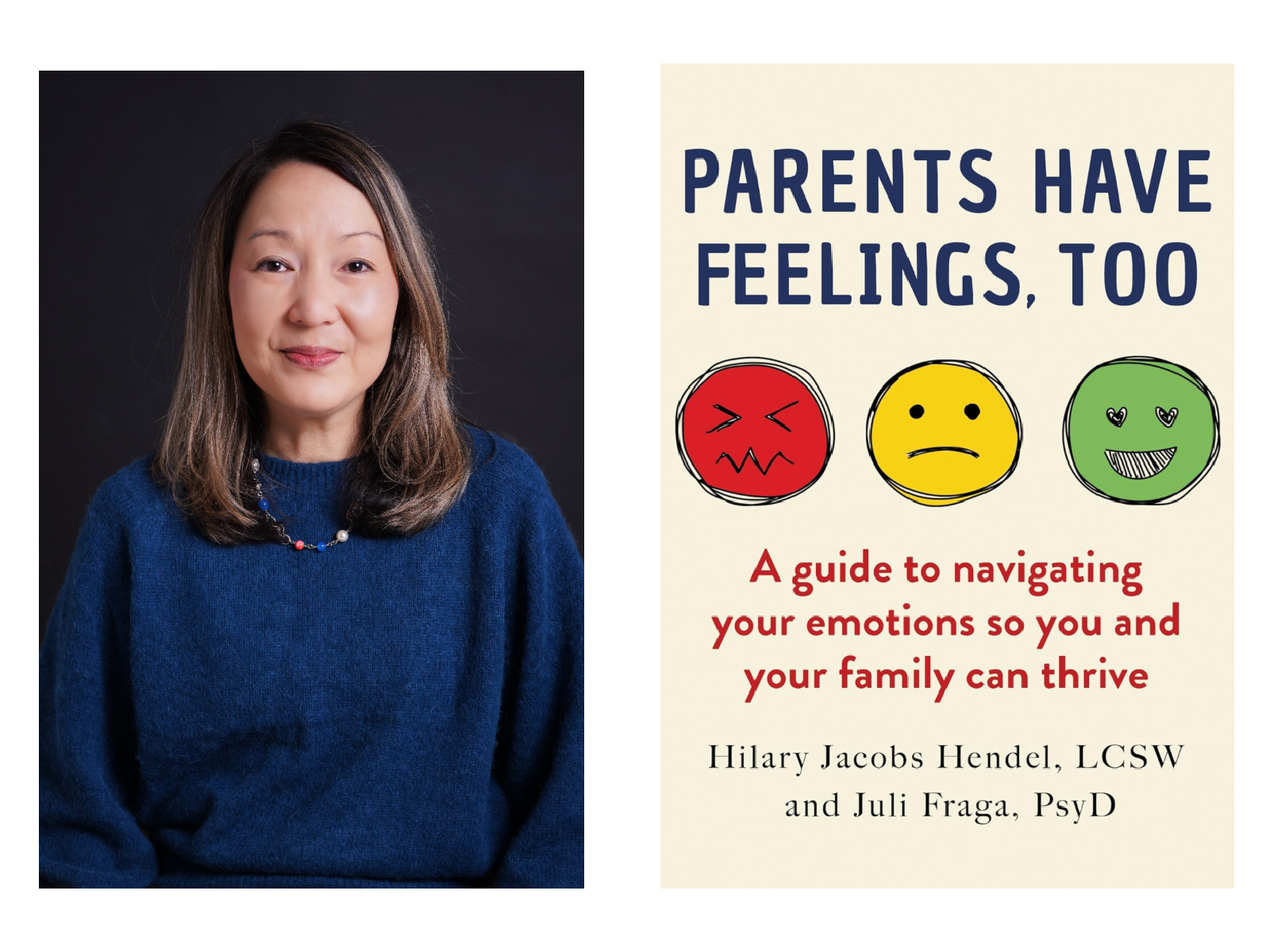
We are honored to have had the chance to talk with Dr. Juli Fraga about the new book that she co-authored, Parents Have Feelings, Too. Juli Fraga, Psy.D., is a psychodynamic and AEDP-trained psychologist in San Francisco. She supports parents with kids of all ages. There are so many nuggets of wisdom in this interview, we hope you find value and encouragement in her words.
• Why did you decide to write this book?
I wrote the book with my co-author, Hillary Jacobs Hendel, because we wanted to share tools with parents to help them work with their own emotions. So many parenting books focus on our children’s feelings, but that is futile if we aren’t empowered to do the same for ourselves.
• Tell me about the title of the book?
“Parents Have Feelings, Too.” It’s meant to be an affirmation for parents and caregivers everywhere. Letting them know that their emotions are real, rooted in biology, and that they matter.
• Can you share more about parent guilt and how it contributes to the parent-child relationship?
Guilt is a self-conscious emotion that prompts us to apologize when we hurt another person. However, parents often feel guilty when they haven’t done anything wrong. But without tools to notice, name, and work through our guilt, it’s easy to resort to avoid the emotion through behaviors, such as forgoing self-care, taking on more than we can with our kids, not setting boundaries, etc. When we do these things too often, our well-being can suffer, leading to parental burnout or resentment about the mental load of parenting.
• On the topic of parent guilt, any strategies for parents to use from the book?
When guilt arises, ask yourself this question: “Have I truly done anything wrong, or do I just feel like I have?” If you haven’t done anything wrong, it’s a sign that guilt may be inhibiting a “core emotion,” such as sadness, anger, or fear. Blocking core emotions is often done unconsciously because it’s a coping mechanism we learned in our families of origin.
• Messages that they may send to their child about anger?
Anger can be such a tricky emotion because we often associate it with hurtful and harmful actions, such as yelling or harming another person. It’s important to let our kids know that anger is okay; it’s how we handle it that matters most. As parents, being able to name and validate our anger helps us befriend the emotion, which can prevent it from coming out in the wrong way.
• Is there such a thing as healthy anger?
Yes! Anger is a core emotion that signals when we’ve been violated or when we need to stand up for ourselves. It’s a survival emotion. Anger helps us take adaptive actions, such as asserting ourselves and setting boundaries.
• Any suggestions for our parent readers about what to do with their own anger?
All emotions come with physical sensations. Anger causes our body temperature to rise and our jaw to feel tense. Noticing these sensations can cue us to anger’s presence. When we notice these feelings, we can pause and take a few deep belly breaths. This calms the nervous system so that we can respond to our anger (especially when we are upset with our children) in constructive ways. Next, we want to name our anger. Just saying “I feel angry” (even to ourselves) goes a long way. Known as “emotion naming,” research shows that putting language on our feelings helps calm down the limbic system, which helps us feel calmer.
• What would you say about parents using the FAFO approach to their child's behavior?
FAFO, also known as “F* around and find out,” seems to be the opposite of more involved parenting styles, such as “gentle parenting.” Of course, children need age-appropriate room to tackle their own problems, but this doesn’t mean neglecting their emotions or leaving them to sit with their bad feelings. Kids depend on us for care and comfort, and it’s our job to provide this nurturing, no matter what parenting philosophy we subscribe to.
• What is one simple strategy from the book that you recommend to all parents you work with?
We have a series of “self-awareness stretches” in the book, aimed to help parents gain insight into how their own childhoods influence their parenting styles. One self-awareness stretch to try: “Growing up, how did my parents respond to guilt or anger?” “How does this influence my relationship with these emotions and how I raise my kids?”